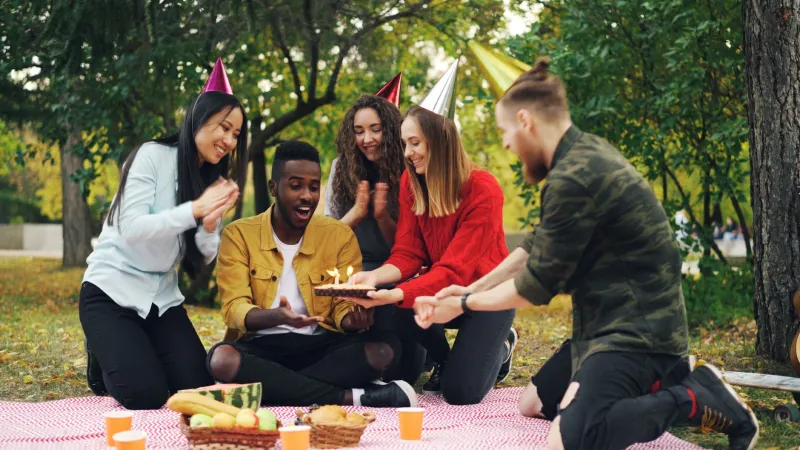
Why Everyone's Ditching Their 1,000 Followers for a Group of 12

There's a quiet exodus happening online, and you might already be part of it without fully realizing it. People are logging off Facebook groups with 80,000 members, muting their Twitter feeds, and slipping into something far more intimate — a Discord server for sourdough obsessives, a Slack channel for indie film fans, a weekly Meetup for local urban gardeners. The mega-platforms aren't dead, but they're increasingly becoming background noise. The real conversations? Those are happening somewhere smaller.
This isn't just a vibe shift. There's genuine psychology behind why micro-communities are winning people over — and why that trend is only picking up speed.
The Problem With Trying to Connect With Everyone
Big social networks were built on a seductive premise: the more people you can reach, the more connected you'll feel. For a while, that logic held up. But somewhere between the algorithm updates, the engagement bait, and the comment sections that turned into battlegrounds, something broke.
Psychologists have a name for what happens when social environments get too large and too noisy — it's called social overload. When you're exposed to too many voices, too many opinions, and too many people you don't really know, your brain doesn't deepen its sense of connection. It retreats. You start scrolling passively instead of engaging genuinely. You perform rather than participate.
A feed full of acquaintances, ads, and strangers arguing about things that don't matter to you isn't community. It's a very loud waiting room.
What Micro-Communities Actually Offer
Contrast that with what happens when you join a group of 30 people who are all obsessed with, say, restoring vintage synthesizers, or training for their first ultramarathon, or raising backyard chickens in the suburbs. Suddenly, the dynamic changes completely.
You're not performing for an audience. You're just... talking to people who get it. Who get you, at least in this one specific way. And that specificity turns out to matter enormously.
Research on group dynamics consistently shows that shared identity — even around something as seemingly trivial as a mutual love of a niche TV show — creates real bonds. When you know that everyone in a space cares about the same thing you do, the barrier to authentic conversation drops significantly. You skip the small talk. You skip the part where you wonder if you'll be judged. You just dive in.
That's the niche community effect in a nutshell: shared interest as a shortcut to genuine belonging.
The Niches That Are Thriving Right Now
So what kinds of micro-communities are people actually flocking to in 2024? A few categories are standing out.
Hobby-first spaces are absolutely booming. Whether it's tabletop RPGs, competitive puzzling, hand-lettering, or amateur astronomy, people are finding each other in forums, Discord servers, and subreddits that function more like cozy clubhouses than chaotic public squares. The specificity is the point — a general "arts and crafts" group feels anonymous, but a group dedicated exclusively to punch needle embroidery feels like a family reunion.
Values-aligned communities are also having a major moment. Groups organized around shared ethics — sustainable living, faith traditions, mutual aid, mindful parenting — give members a sense that they're not just sharing a hobby but a worldview. That deeper alignment tends to produce stronger, longer-lasting connections.
Local and hyperlocal groups are making a comeback too, which is interesting given how much digital community has historically pulled people away from their physical neighborhoods. Apps like Nextdoor have had mixed results, but grassroots Meetup groups, neighborhood Discord servers, and community garden collectives are filling a real gap. People want the warmth of knowing their neighbors again — they just need a low-pressure on-ramp.
Professional micro-networks — think industry-specific Slack groups or invitation-only LinkedIn communities — are replacing the exhausting performance of public professional profiles. Instead of broadcasting credentials to thousands, people are having real career conversations with a few dozen peers who actually understand their field.
The Trust Factor
One thing all of these thriving micro-communities share is a higher baseline of trust. When a group is small and focused, accountability exists in a way it simply can't on a platform with millions of users. You recognize the regulars. People know your handle. If someone acts badly, it's noticed. That social accountability might sound like pressure, but most people experience it as safety.
And safety is what makes vulnerability possible. And vulnerability — being willing to say "I'm struggling with this" or "I have a weird question" or "does anyone else feel this way?" — is what transforms a group chat into an actual community.
At Emerald Social, this is something we think about a lot. The idea of connecting around what genuinely matters to you isn't just a tagline — it's the architecture of how real relationships actually form. You don't bond over being human in a general sense. You bond over the specific, sometimes embarrassingly particular things that light you up.
How to Find Your Micro-Community (or Build One)
If you're feeling the pull toward something smaller and more meaningful, the good news is that the infrastructure is already there. Discord alone hosts millions of active servers spanning every imaginable interest. Reddit's smaller subreddits function like tight-knit forums. Facebook Groups, for all of the platform's flaws, still hosts genuinely active communities when the topic is specific enough. Meetup.com is seeing renewed energy in cities across the US.
The trick is to go narrow. Don't join a general cooking group — find the group for people learning traditional Korean fermentation. Don't join a generic book club — find the one that reads only translated fiction, or only debuts, or only books by authors from your region.
And if the exact community you're looking for doesn't exist yet? Start it. Seriously. Some of the most vibrant micro-communities online began because one person posted something like "is anyone else into this weird specific thing?" and was stunned by how many hands went up.
Smaller Isn't a Compromise — It's the Point
There's a tendency to think of smaller communities as a consolation prize, a fallback for people who couldn't hack it on the big platforms. That framing has it completely backwards. Choosing a community of 15 deeply engaged people over a network of 1,500 disengaged followers isn't settling. It's upgrading.
The most meaningful connections in your life — online or off — have almost certainly come from moments of specific, mutual recognition. The feeling of oh, you too? That feeling doesn't scale. It lives in small rooms, tight circles, and niche corners of the internet where everyone showed up because they actually care.
Maybe it's time to find yours.