Stop Waiting for Your People to Find You: A Real Guide to Building Your Tribe
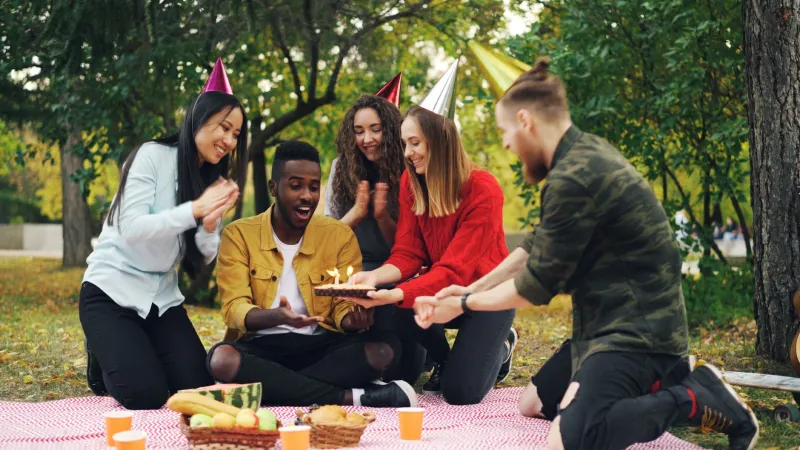
The Default Social Life Isn't Working for Most of Us
Here's an uncomfortable truth: a lot of Americans are lonely — not because they're unlikable, but because they've been playing social life on autopilot. We end up friends with whoever happens to be nearby. The coworker who sits two desks over. The neighbor whose dog keeps wandering into your yard. The parent from your kid's soccer team you only ever talk to on Saturday mornings.
These connections aren't bad. But they're rarely chosen. And there's a pretty significant difference between the people life drops in front of you and the people who genuinely share your values, your curiosity, your sense of humor, or your vision for how you want to live.
The good news? Finding your actual tribe — the people who energize you rather than drain you — is completely possible. It just takes a little more intention than most of us were ever taught to apply.
Start With Yourself (Seriously, Don't Skip This Part)
Before you can find your people, you need a clearer picture of who you actually are. That sounds obvious, but most folks have never sat down and mapped out what they genuinely care about versus what they've inherited from their upbringing, their job, or their social environment.
Grab a notebook and ask yourself a few honest questions:
- What do you talk about when nobody's judging you?
- What causes or ideas make you genuinely fired up?
- What would you do every weekend if money and obligation weren't factors?
- What values do you absolutely need in a close friendship — loyalty, intellectual curiosity, humor, activism, faith, creativity?
Jamila, a 34-year-old graphic designer from Atlanta, did exactly this exercise after feeling disconnected despite having a packed social calendar. "I realized I had a ton of acquaintances and almost nobody I could call about the things I actually cared about — sustainable living, Black feminist literature, hiking," she says. "My social life was full but it felt empty."
That clarity became her compass.
Go Where Your Values Already Live
Once you know what matters to you, look for the spaces — physical or digital — where those things are already happening. This is where a lot of people get tripped up. They wait for community to come to them rather than walking through the door themselves.
Some practical starting points:
Local groups and meetups. Websites like Meetup.com and Eventbrite are goldmines for niche communities. Whether you're into urban foraging, Dungeons & Dragons, anti-racism book clubs, or amateur astronomy, there's almost certainly a group within driving distance of most mid-to-large US cities. Show up even when it feels awkward. Especially when it feels awkward.
Interest-based online communities. Reddit, Discord servers, Facebook Groups, and platforms like Emerald Social are built specifically around shared interests rather than shared geography. These aren't lesser relationships — for a lot of people, they're the most honest connections they have. Marcus, a software developer in rural Montana, found his closest friends through an online community for dads navigating mental health. "We've never been in the same room, but these guys know me better than anyone I grew up with," he says.
Volunteer work and activism. Few things bond people faster than working toward something they both believe in. If you care about housing equity, environmental justice, animal rescue, or your local library system, volunteering drops you directly into a room full of people who share that priority. The relationships that form around shared doing tend to be deep and durable.
Classes and skill-building spaces. Pottery studios, coding bootcamps, improv classes, CrossFit gyms, community gardens — these are all places where people gather repeatedly around a shared pursuit. Repetition matters. You don't build a tribe from a single interaction; you build it from showing up again and again until familiar faces become real friends.
Don't Underestimate the Power of Being Specific
One of the biggest mistakes people make when searching for community is keeping their interests too vague. "I like music" is not a community. "I'm obsessed with 90s Pacific Northwest indie rock and I want to talk about it constantly" — now that's a tribe waiting to happen.
The more specific you are about what you're looking for, the faster you'll find it. Niche communities are often the most welcoming precisely because their members know how rare it is to find someone who shares that exact passion. Priya, a 28-year-old nurse in Chicago, was nervous to join an online group specifically for South Asian women who practice Stoic philosophy. "I thought it would be too specific, like maybe five people would be in it," she laughs. "There were hundreds of us. I've made three really close friends from it."
The Courage to Show Up as Yourself
Finding your tribe isn't just a logistics problem — it's also an emotional one. A lot of us have learned, through years of social conditioning, to hide the parts of ourselves that feel too weird, too intense, or too different. We show up to new groups performing a more palatable version of who we are.
But here's the thing: that strategy guarantees you'll attract people who like your performance, not people who actually connect with you.
Being genuine — sharing your real opinions, asking the questions you're actually curious about, admitting what you don't know — is the fastest path to real connection. It's also terrifying. That's okay. Do it anyway.
"I used to soften everything about myself in new social situations," says Derek, a 41-year-old teacher from Nashville who eventually found his community through a local secular humanist group. "The moment I started just saying what I thought, I started meeting people who actually wanted to be around me. The ones who didn't vibe with me just... drifted off. And that was fine."
Maintain the Connections You Make
Finding your people is only half the equation. Keeping those relationships alive takes consistent, low-pressure effort. Send the article that made you think of someone. Show up to their events. Check in when you haven't heard from them in a while. Invite people to things even when you're not sure they'll say yes.
Community is less like a destination and more like a garden — it needs regular attention to stay alive.
Your Tribe Is Out There
The era of settling for whoever happens to be nearby is over. Between the internet's ability to connect people across geography and a growing cultural awareness around intentional living, there has never been a better time to build a social life that reflects who you actually are.
Your people exist. They're probably wondering where you are too. Go find them.